Travel CRM and Travel APIs
Travel CRM (Customer Relationship Management) and Travel APIs (Application Programming Interfaces) are two important components in the travel industry that help businesses manage customer relationships and integrate various travel services and data.
Lets clear doubts related to Travel CRM with Travel APIs as it is most important tools for our travel businesses. In the travel industry, having the Best Travel CRM Software is very important for travel operators or travel business owners to manage customer relationships, streamline operations, and provide customized experiences. A top-notch solution is a Travel CRM with API Integration, offering features like Itinerary Builder Software.
Travel CRM
Travel CRM Systems are designed to help travel businesses, such as travel agencies, tour operators, and airlines, manage their customer relationships more effectively.
Key features of a travel CRM system include:
i. Customer data management: Storing and organizing customer information, including contact details, travel preferences, and past booking history.
ii. Booking and reservation management: Tracking and managing customer bookings, changes, and cancellations.
iii. Marketing and communication: Automating marketing campaigns, sending personalized offers and updates, and managing customer interactions.
iv. Reporting and analytics: Generating reports and insights on customer behavior, sales, and operational performance.
Travel CRM systems help businesses better understand their customers, personalize their services, and improve customer loyalty and satisfaction.
Travel APIs
Travel APIs are software interfaces that allow different travel-related systems and services to communicate and exchange data with each other.
Travel APIs enable travel businesses to integrate various travel-related data and services, such as:
i. Flight and airline data: Accessing real-time flight availability, pricing, and booking information.
ii. Hotel and accommodation data: Integrating hotel inventory, rates, and reservation management.
iii. Car rental and transportation data: Accessing vehicle availability, rates, and booking capabilities.
iv. Destination and content data: Integrating information about destinations, attractions, and travel-related content.
Travel APIs facilitate the development of comprehensive travel booking platforms, travel management systems, and travel-related applications.
By leveraging Travel APIs, businesses can enhance their product offerings, streamline their operations, and provide a more seamless and integrated travel experience for their customers.
The combination of a robust Travel CRM system and the integration of Travel APIs allows travel businesses to:
i. Gain a deeper understanding of their customers' preferences and behaviors
ii. Personalize their services and offerings to meet the unique needs of individual customers
iii. Automate and streamline various operational processes, such as booking management and customer communication
iv. Provide a more comprehensive and integrated travel experience by seamlessly connecting different travel-related services and data
Here, we'll answers few recent inquiries and their responses in this post about the Best Travel CRM Software, its benefits, and the purpose of API Integration.
Q. How is Travel CRM used in the travel industry?
Answer: Travel CRM, or Customer Relationship Management, is a pivotal tool in the travel industry, enhancing customer interactions and operational efficiency.
- Personalized Customer Experiences: Tailoring travel recommendations based on customer preferences.
- Booking Management: Streamlining reservation processes and managing bookings seamlessly.
- Communication Hub: Centralizing customer communications for efficient support.
- Sales and Marketing: Enhancing targeted marketing efforts and tracking sales performance.
- Data Analytics: Analyzing customer data to identify trends and optimize services.
So we can say that, Travel CRM transforms the travel experience by creating stronger customer relationships and enabling travel businesses to stand in a competitive travel world.
Q. What is helloGTX Travel CRM?
Answer: helloGTX is a travel CRM. Through GTX, travel agents can manage leads, create itineraries, oversee sales teams, operate travel websites, sell packages online, link their Facebook and Instagram leads to CRM, oversee suppliers, and much more. Let me put it this way: helloGTX helps you save operating costs by at least 50% and double your sales figures.
Here are some resources where you can learn more about helloGTX Travel CRM:
- helloGTX website: https://www.hellogtx.com/
- Capterra Reviews: https://www.capterra.com/p/180664/helloGTX/
Q. What sets apart the Best Travel CRM from traditional CRM systems?
Answer: The Best Travel CRM includes features for managing customer interactions, bookings, and itinerary planning. It was designed especially for the travel business. It offers an extensive solution for travel businesses, and crosses beyond traditional CRM capabilities.
Q. Which Travel CRM is easy to use?
Answer: helloGTX: The Easy-to-Use Travel CRM Solution:
Because of its easy-to-use interface and simple design, helloGTX stands out as the preferred travel CRM among the many solutions available. GTX guarantees that travel professionals can effortlessly operate the software, irrespective of their technical proficiency, by prioritizing simplicity. Its simple features, effective workflow, and easily available tools make it the perfect option for travel agencies searching for a user-friendly travel CRM system. It also streamlines multiple tasks, such as customer data management and booking processes, allowing users to fully utilize an entire Travel CRM System without extra effort.
helloGTX is a product of Catabatic Technology and it includes features such as lead management, customer profiling, Itinerary Builder, Facebook and Instagram lead Integration, Website, Flight and Hotel API Integration, invoicing, and reporting.
Q. Why is Travel CRM with API Integration required in today's travel landscape?
Answer: Travel CRM with API Integration ensures seamless connectivity between various systems, enabling real-time data exchange. This integration is vital for consolidating information, automating processes, and delivering a unified and responsive customer experience.
Q. Name the best-performing APIs that can get easily integrated with Travel CRM Software.
Answer: Best-Performing APIs for Seamless Travel CRM Software Integration:
When it comes to choose the best Travel API Integration for efficient flight and hotel bookings, several top-performing APIs stand out for their reliability and functionality.
These are the main which can easily get integrated with Travel CRM:
- Riya Travel API Integration: Known for its comprehensive travel solutions, Riya Travel API seamlessly integrates into CRM systems, offering a wide range of booking options.
- Nextra API Integration: Nextra API provides a robust platform for integrating diverse travel services, ensuring a smooth booking experience within Travel CRM Software.
- Go Fly API Integration: Go Fly API enhances the CRM system with its user-friendly interface, simplifying the process of flight bookings for travel agencies.
- AirIQ API Integration: AirIQ API stands out for its real-time data exchange capabilities, enabling dynamic flight and hotel information integration into the Travel CRM.
- Fly Hub API Integration: Renowned for its versatility, Fly Hub API seamlessly connects with Travel CRM Software, offering a comprehensive suite for travel planning and booking.
- Etrav API Integration: Etrav API is recognized for its flexibility, providing a reliable connection for diverse travel services, including flights, hotels, and more.
- Travel Boutique Online (TBO) API Integration: TBO API Integration is tailored for travel agencies, offering a feature-rich solution that effortlessly integrates into Travel CRM Software.
- TripJack API Integration: TripJack API adds value to CRM systems with its dynamic features, simplifying the process of booking flights and accommodations.
- Via API Integration: Via API seamlessly integrates with Travel CRM Software, providing access to a vast inventory of travel options for enhanced customer service.
- Yatra API Integration: Yatra API brings its extensive travel services to CRM platforms, facilitating a comprehensive and user-friendly Yatra Flight API Integration and, Yatra hotel API Integration for best booking experience.
- Series Fare API Integration: Series Fare API adds versatility to Travel CRM Software, allowing integration with various fare options and travel services.
- Cheap Fixed Departure API Integration: Known for its cost-effective solutions, Cheap Fixed Departure API seamlessly integrates with Travel CRM, offering budget-friendly travel options.
As a result, these APIs, including Riya Travel, Nextra, Go Fly, AirIQ, Fly Hub, Etrav, TBO, TripJack, Via, Yatra, Series Fare, and Cheap Fixed Departure, are renowned for their performance and ease of integration, enhancing the capabilities of Travel CRM Software for a seamless travel booking experience which you can prefer without a doubt.
Q. What is XML?
Answer: XML APIs use XML as the medium for data exchange. They are widely used in various industries, including travel, to transmit data between systems in a structured format.
Advantages of XML APIs:
Interoperability: XML APIs facilitate data exchange between different systems regardless of the underlying technology.
Flexibility: XML is extensible and can be customized to meet specific requirements.
Standardization: Many industries have established XML standards for data interchange, ensuring consistency and reliability.
Q. What is a Hotel API?
Answer: A Hotel API allows developers to integrate hotel booking functionality into their applications or websites. It connects with various hotel databases to provide real-time access to information about room availability, pricing, booking, and more.
Key Features of Hotel APIs:
Real-Time Availability: Access to real-time data on room availability across multiple hotels.
Booking Management: Functionality to book, modify, and cancel reservations.
Detailed Information: Provides detailed information about hotels, including amenities, room types, photos, and reviews.
Price Comparison: Allows users to compare prices from different sources to find the best deals.
Benefits of Hotel APIs:
Enhanced User Experience: Users can book hotels directly from the application without being redirected to third-party sites.
Increased Revenue: Offering hotel booking services can generate additional revenue for businesses.
Customizable Solutions: Developers can tailor the booking experience to fit the brand and needs of their application.
Q. What is a Flight API?
Answer: A Flight API provides access to airline data, allowing applications to offer flight booking services. It connects with various airline databases to retrieve information on flights, including schedules, fares, availability, and booking options.
Key Features of Flight APIs:
Flight Search: Functionality to search for flights based on various criteria such as destination, dates, and price range.
Booking and Reservation: Ability to book, manage, and cancel flight reservations.
Fare Information: Provides detailed fare information, including taxes, fees, and seat availability.
Flight Status: Real-time updates on flight status, including delays and cancellations.
Benefits of Flight APIs:
Comprehensive Data: Access to a vast range of flight options from multiple airlines.
User Convenience: Users can search and book flights directly from the application, improving the booking experience.
Revenue Generation: Integrating flight booking services can open up new revenue streams for businesses.
Brand Loyalty: Offering a seamless and efficient flight booking experience can enhance customer satisfaction and loyalty.
Q. How does Best Travel CRM Software contribute to personalized customer experiences?
Answer: Best Travel CRM Software captures and analyzes customer data to provide insights into preferences and behaviors. This data is then used to create personalized travel recommendations, enhancing customer satisfaction and loyalty.
Q. What are the key features to consider when selecting the best travel CRM software?
Answer: When choosing the best travel CRM software, consider the following key features:
- Customer Management: A robust travel CRM should offer comprehensive customer management capabilities, allowing agencies to store and manage customer profiles, preferences, booking history, and communication history in a centralized system.
- Tour Itinerary Builder: Look for a CRM that includes an itinerary builder software, enabling agencies to create and customize itineraries for clients. This feature simplifies the itinerary creation process, saves time, and ensures accuracy.
- Travel API Integration: API Integration is important for smooth connectivity with external systems, suppliers, and travel service providers. This integration ensures real-time data synchronization, automated processes, and access to a wide range of travel inventory.
- Reporting and Analytics: A good Travel CRM should provide reporting and analytics tools to track key performance metrics, analyze customer behavior, and gain insights for better decision-making and strategic planning.
Q. What role does Itinerary Builder Software play in modern travel planning?
Answer: Itinerary Builder Software revolutionizes travel planning by allowing users to create detailed, customized itineraries. It streamlines the planning process, ensuring a seamless and personalized journey for travelers.
Here are some key points highlighting the significance of Itinerary Builder Software:
- Personalization: It allows travelers to create customized itineraries tailored to their preferences, interests, and budget, ensuring a personalized travel experience.
- Time and Efficiency: Itinerary Builder Software saves time by automatically generating itineraries based on selected destinations, dates, and activities. It eliminates the need for manual planning and research, streamlining the process.
- Organization: It helps travelers stay organized by consolidating travel details, including flights, accommodations, transfers, activities, and reservations, in one central location.
- Collaboration: Itinerary Builder Software facilitates collaboration between travelers and travel agents, allowing seamless communication, real-time updates, and shared access to itineraries.
- Seamless Updates: Itineraries can be easily updated with real-time information, such as flight changes or cancellations, ensuring travelers have the most current details.
- Mobile Accessibility: Modern Itinerary Builder Software often includes mobile apps, enabling travelers to access their itineraries on the go, even offline, enhancing convenience and accessibility.
- Enhancing Customer Service: Travel agencies can use Itinerary Builder Software to provide value-added services, such as recommendations, local tips, and personalized suggestions, improving customer satisfaction.
All things considered, Tour Itinerary Builder Software which simplifies travel planning, enhances the traveler's experience, and improves operational efficiency for travel agencies, making it an most valuable tool in modern travel planning.
Q. What is the importance of a Travel itinerary builder in the travel business and how does it contribute To Travel Software?
Answer: Importance of a Travel Itinerary Builder in the Travel Business:
A Travel Itinerary Builder holds significant importance in the travel business, acting as a strategic tool that enhances customer experiences and contributes to the efficiency of Travel Software.
- Personalization of Travel Plans: The Itinerary Builder allows travel businesses to create customized travel plans based on individual preferences and requirements. This personalization adds value by tailoring the trip to the unique needs of each traveler.
- Streamlined Planning Process: By offering a centralized platform to organize flights, accommodations, activities, and more, the Itinerary Builder streamlines the planning process. This results in a more efficient workflow for both travel agents and customers.
- Enhanced Customer Engagement: Providing travelers with a visually appealing and detailed itinerary enhances customer engagement. It serves as a comprehensive guide, keeping customers informed about the details of their journey and fostering a connection with the travel brand.
- Improved Time Management: The Itinerary Builder aids in effective time management by presenting the travel schedule in a structured format. This ensures that travelers can make the most of their time at each destination without missing out on key experiences.
- Increased Operational Efficiency: For travel software platforms, integrating a robust Itinerary Builder contributes to increased operational efficiency. It automates the process of creating and updating travel plans, reducing manual workload and the likelihood of errors.
- Competitive Advantage: Offering a sophisticated Itinerary Builder provides a competitive edge in the travel industry. It reflects a commitment to delivering comprehensive travel solutions and sets a travel business apart from competitors.
- Customer Satisfaction and Loyalty: A well-organized and customized itinerary contributes to overall customer satisfaction.
- Integration with Travel Software Ecosystem: This integration ensures a coordinate and connected Travel Technology Software.
Tour Itinerary Builder plays a important role in shaping the travel experience. As an integral component of Travel Software, it contributes to a comprehensive and seamless travel planning and booking process.
Q. What makes a Travel CRM with API integration the best choice for travel agencies?
Answer: A Travel CRM with API integration offers numerous advantages for travel agencies:
- Seamless Connectivity: API integration enables the travel CRM to connect with external systems, such as booking engines, airlines, hotels, and other travel service providers. This ensures real-time data updates, availability checks, and automated booking processes, enhancing operational efficiency.
- Efficient Itinerary Management: The itinerary builder software within the travel CRM allows agencies to create customized itineraries for clients. With API integration, agencies can access real-time information about flights, accommodations, and activities, allowing for accurate and up-to-date itineraries.
- Enhanced Customer Experience: API integration enables agencies to provide personalized recommendations, real-time updates, and tailored offers to customers. This level of personalization enhances the overall customer experience and increases customer satisfaction and loyalty.
To Be Conclude
Because effortless integration with third-party systems, improves customer service, and simplifies processes, after all travel businesses can choose a travel CRM that allows them to deliver great service, customize experiences, and maintain their position as leaders in the market by taking advantage of essential features like client management, itinerary building, and API Integration.
Call To Action
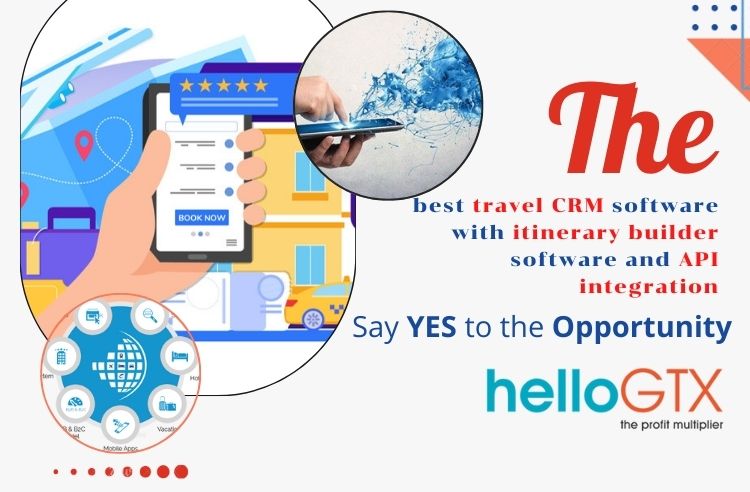
As a matter of fact, Say yes to the opportunity to increase your agency's performance in the ever-changing travel sector by accepting the power of a Best Travel CRM at the same time you can book your free live demo if you really forward to invest in this most demanding software.
Want to see this in action?
Schedule a live demo to see how WhatsApp automation works for your agency.
What are The Travel Industry Requirements Now a Days?

The travel business has been through major changes as of my previous research update in November 2023. These changes have been encouraged by a number of factors, including global events like the COVID-19 pandemic, advancing consumer preferences, and advancements in technology such as Best Travel CRM, Travel API Integration or Travel CRM with API Integration, Blockchain for smooth processing and more upgrading tools for travel industries.
The requirements of travel businesses are also changing now a days. Today, travel businesses need to be able to:
1. Provide a personalized customer experience
Customers expect travel businesses to know their preferences and provide them with tailored recommendations and offers.
2. Offer a seamless travel experience
Customers want to be able to book travel, check in for flights, and manage their itineraries through a single platform.
3. Be flexible and adaptable
The travel industry is subject to constant change, so travel businesses need to be able to adapt to new regulations, technologies, and customer demands.
4. Be data-driven
Travel businesses need to be able to collect, analyze, and use data to make informed decisions about their marketing, sales, and operations.
5. Be omnichannel:
Customers expect to be able to interact with travel businesses through a variety of channels, including online, mobile, and in person.
Apart from these fundamental requirements, a few industry-specific requirements also apply to travel agencies operating in various areas. Travel agencies in the hotel sector must be able to manage reservations for rooms and guest amenities, while those in the airline sector must be able to manage flight schedules and customer manifests.
Here are some of the specific requirements for travel businesses today:
1. Online Travel booking and payment
Customers expect to be able to book travel and pay for it online with the help of Online Travel Booking Management Software Solutions.
2. Mobile apps
Customers expect to be able to access travel information and manage their itineraries on their Smart Mobile Application Development Services.
3. Social media presence
Travel businesses need to be active on Social Media in order to engage with customers and promote their products and services.
4. Data security
Travel businesses need to protect their customers' personal data.
5. Multilingual support
Travel businesses need to be able to provide customer support in multiple languages.
Companies in the travel industry who are capable of meeting these requirements would have a strong chance of succeeding in the competitive marketplace of today.

Does Travel CRM with API Integration can fulfill Travel Industry Requirement?
Yes, Travel CRM with API Integration can fulfill many of the Travel industry requirements. Here are some of the key ways in which Travel CRM with API Integration can help travel businesses meet these requirements:
1. Personalized Customer Experience
It can help travel businesses provide a personalized customer experience by collecting and analyzing customer data, such as travel preferences, booking history, and customer interactions. This data can then be used to personalize the customer experience by providing tailored recommendations, targeted promotions, and personalized support.
2. Seamless Travel Experience
Travel CRM with API Integration can help travel businesses offer a seamless travel experience by integrating with a variety of travel systems, such as Hotel Booking Engine, Flight Booking Engine payment gateways, and loyalty programs. This integration allows travel businesses to automate many of the manual tasks involved in booking travel and managing customer interactions, such as checking availability, generating invoices, and sending travel documents.
3. Flexibility and Adaptability
By providing one system to handle their customer data, reservations, and trip plans, it will help Travel Agencies in being flexible and responsive. Travel agencies can quickly adapt their processes and systems in order to meet new client needs, technological advancements, and government guidelines thanks to this integrated platform.
4. Data-Driven Insights
It can help travel businesses be data-driven by providing them with a variety of reports and analytics tools. These tools allow travel businesses to track their performance, identify trends, and make informed decisions about their marketing, sales, and operations.
5. Omnichannel Approach
It can also help travel businesses provide an omnichannel approach by integrating with a variety of customer engagement channels, such as email, social media, and chatbots. This integration allows travel businesses to provide a consistent customer experience across all channels.
In addition to these specific requirements, it can also help travel businesses meet the following basic requirements, such as:
-Streamline Operations and Reduce Costs
-Improve Customer Satisfaction and Loyalty
-Increase Sales and Revenue
-Gain a Competitive Edge in the Travel Industry
Overall, it is a powerful tool that can help travel businesses meet the best requirements of the travel industry. By providing a customized customer experience, offering a seamless travel experience, enabling flexibility and adaptability, providing data-driven insights, and supporting an omnichannel approach, Travel CRM with API Integration can help travel businesses succeed in today's competitive market.
Source Url: Why Travel Industry Required Travel CRM with API Integration
Why Travel Industry needed Travel CRM with API Integration In this Competitive World?
Travel agencies operate in a highly demanding and competitive industry where they are continually searching for innovative ways to improve client service, cut costs, and secure their place in the market. Travel CRM with API Connection is now an effective tool that travel companies can use to get beyond these challenges and expand.
1. Enhanced Customer Experience
It empowers travel businesses to deliver a superior customer experience by leveraging data-driven personalization. By integrating with various data sources, such as booking history, past interactions, and travel preferences, Travel CRM Systems can create a comprehensive customer profile. This rich customer data allows businesses to tailor recommendations, offer targeted promotions, and provide personalized support, enhancing customer satisfaction and loyalty.
2. Streamlined Booking Process
It simplifies and streamlines the booking process, making it more convenient and efficient for customers. XML API Integration, hotel API Integration, Flight API Integration, TripJack API Integration, TBO API Integration, Air IQ API Integration and a lot more than you can think of enables real-time synchronization with booking engines, payment gateways, and other relevant systems, automating many manual tasks involved in booking. This automation reduces the time and effort required for customers to complete bookings, leading to a more seamless and enjoyable booking experience.
3. Improved Operational Efficiency
When you automates Best Travel CRM with API can ease many routine tasks and processes, freeing up Travel Agents to focus on more complex customer interactions and strategic initiatives. By automating tasks such as checking availability, generating invoices, and sending travel documents, Best Travel CRM Systems streamline operations, reduce errors, and improve overall efficiency. This automation allows businesses to handle larger volumes of bookings and inquiries with greater efficiency.
4. Data-Driven Insights and Decision-Making
It gives travel agencies useful information on booking trends, consumer behaviour, and sales results. To find trends, anticipate customer needs, and improve marketing tactics, this data can be explored. Travel companies can increase profitability and growth by using data-driven insights to guide decisions regarding product offers, pricing regulations, and marketing efforts.
5. Competitive Advantage
In the competitive travel industry, adopting Best Travel CRM with API Integration can provide a significant competitive advantage. By enhancing customer experiences, streamlining operations, and gaining data-driven insights, travel businesses can attract new customers, retain existing ones, and differentiate themselves from competitors.
Final Words:
When You integrate with the Best Travel CRM with API, than it has become an indispensable tool for travel businesses seeking to thrive in the dynamic travel industry. Its ability to personalize customer experiences, streamline operations, improve efficiency, provide data-driven insights, and deliver a competitive edge makes it a valuable asset for any travel companies looking to succeed in today's competitive landscape.
Want to see this in action?
Schedule a live demo to see how WhatsApp automation works for your agency.
Advantages of Combining IVR (Interactive Voice Response) with Your CRM: Key To Customer Management

Integrating Interactive Voice Response (IVR) with your Customer Relationship Management (CRM) system can offer several benefits to your business.
Travel CRM with IVR can provide customers with quick and efficient self-service options, such as checking account balances or appointment scheduling. Integrating IVR with Travel CRM ensures that customer interactions are seamless and provide relevant information from your CRM database.
What is IVR?
IVR stands for Interactive Voice Response. It is an automated telephony system that interacts with callers through voice or touch-tone keypad selections. IVR systems are designed to handle a high volume of incoming calls and can perform various functions without the need for human intervention.
How Does IVR Integration with CRM Work?
Here's how IVR integration with CRM works:
1. Customer Interaction with IVR:
A customer initiates an interaction with the IVR system by making a phone call.
The IVR system provides options, such as selecting a department, checking account balances, or accessing information.
2. Customer Inputs:
The customer responds to the IVR prompts by speaking or pressing keys on their phone's keypad to select the desired option.
3. Data Collection:
The IVR System collects information from the customer, which can include account numbers, order IDs, preferences, and other relevant data.
4. Data Validation:
The IVR system validates the collected data and ensures it is accurate and complete.
5. Integration with CRM:
The IVR system is integrated with the CRM system through application programming interfaces (APIs) or other connectivity methods.
Data collected from the customer in the IVR is transmitted to the CRM system in real-time.
Other important points how IVR integration with CRM works:
6. Customer Data Retrieval:
The CRM system retrieves customer data associated with the provided information (e.g., customer profile, purchase history, previous interactions).
7. Personalization:
The CRM system uses the retrieved data to personalize the customer's experience. This can include addressing the customer by name, offering personalized recommendations, and providing information specific to their account. It best you choose a Travel CRM with API Integration which has all the features.
8. Data Storage and Logging:
The CRM system logs the interaction, recording details about the customer's query, the IVR selections made, and any data exchanged.
9. Case Management:
If the customer's query or request requires further assistance, the CRM system creates a case or ticket that is assigned to a live agent for resolution. The CRM system provides all relevant information collected from the IVR to the agent.
10. Seamless Handoff:
When a live agent takes over the conversation, they have access to all the data from the IVR interaction, allowing for a smooth and informed continuation of the conversation.
11. Analytics and Reporting:
The data collected from IVR interactions is used for analytics and reporting. Businesses can gain insights into customer behavior, preferences, and common queries.
12. Improvement and Personalization:
The data collected from IVR interactions and CRM integration can be used to refine IVR menus, personalize responses, and enhance the overall customer experience.
By integrating IVR with CRM, businesses can provide a more personalized and efficient customer service experience, automates routine tasks, and gathers valuable data for analytics and continuous improvement.
This integration streamlines customer interactions, improves data accuracy, and helps businesses better understand and serve their customers. Take guidance from the Travel Portal Development experts.
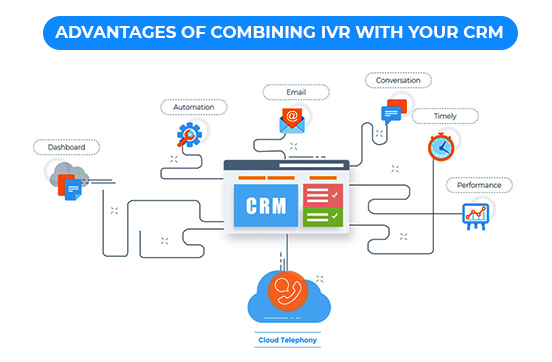
What are the Benefits of Connecting IVR to your CRM?
Here are the key advantages of connecting IVR to your CRM:
1. Enhanced Customer Experience:
Personalization: CRM data is used to personalize IVR interactions, addressing customers by name and providing relevant information based on their history and preferences.
Quick Access to Information: Customers can access their account details, order status, or other information more efficiently through the IVR system.
24/7 Availability: The Best Travel CRM with IVR Systems are available around the clock, ensuring customers can access information and services at their convenience.
2. Efficient Call Routing:
IVR directs calls to the appropriate department or agent based on the customer's input. This reduces the need for live receptionists and ensures callers get the help they need faster.
3. Data Synchronization:
Customer data collected through the IVR system is automatically synchronized with the CRM system. This ensures data consistency and reduces the risk of errors in customer records.
4. Streamlined Customer Service:
Automates Routine Tasks: IVR handles routine tasks, such as balance inquiries, account updates, and appointment scheduling, freeing up live agents to focus on more complex issues.
Faster Issue Resolution: IVR provides the customer's data and history to live agents when needed, enabling quicker issue resolution.
5. Personalized Marketing:
CRM data can trigger specific IVR responses. Businesses can segment customers based on their CRM data and provide targeted promotions or information through the IVR system.
Other advantages of connecting IVR to your CRM:
6. Multi-Channel Communication:
IVR can seamlessly transfer customer interactions from the phone to other channels, such as email or chat, while maintaining a consistent record in the CRM system.
7. Data for Analytics:
The integration provides valuable data for analytics and reporting. It helps businesses gain insights into customer behavior, preferences, and common queries.
8. Compliance and Security:
Integrating CRM with IVR helps maintain compliance with industry regulations. It ensures that sensitive customer data is securely managed and protected.
9. Cost Savings:
By automating routine tasks and streamlining customer interactions, businesses can reduce operational costs while providing improved services.
10. Improved Sales and Upselling:
CRM data can prompt IVR to offer customers additional products or services based on their past purchases or interests.
11. Continuous Improvement:
The data collected from integrated IVR interactions can be used to refine IVR menus, tailor responses, and enhance the overall customer experience over time.
By connecting Travel CRM with IVR, you create a unified platform that enables efficient, personalized, and data-driven customer interactions. This integration not only enhances the customer experience but also streamlines business operations and supports data-driven decision-making.
Choosing the Right Tools
Integrating IVR with your CRM system creates a unified customer service platform, enabling efficient and personalized interactions. With Catabatic Technology Product's helloGTX’s Travel CRM streamline operations, improves customer satisfaction, and provides valuable insights for your business.
Wrapping up
IVR systems offer cost-effective and efficient solutions for handling routine customer interactions, reducing the workload on live agents, and providing 24/7 access to information and services. With helloGTX’s Travel CRM streamline customer service and improve communication with callers.
Want to see this in action?
Schedule a live demo to see how WhatsApp automation works for your agency.